Progress
Skinny Fat: What It Is and How to Fix It
Skinny fat means a normal weight with low muscle and higher body fat. What it looks like, why BMI misses it, and how strength training and protein fix it.
On this page 8 sections
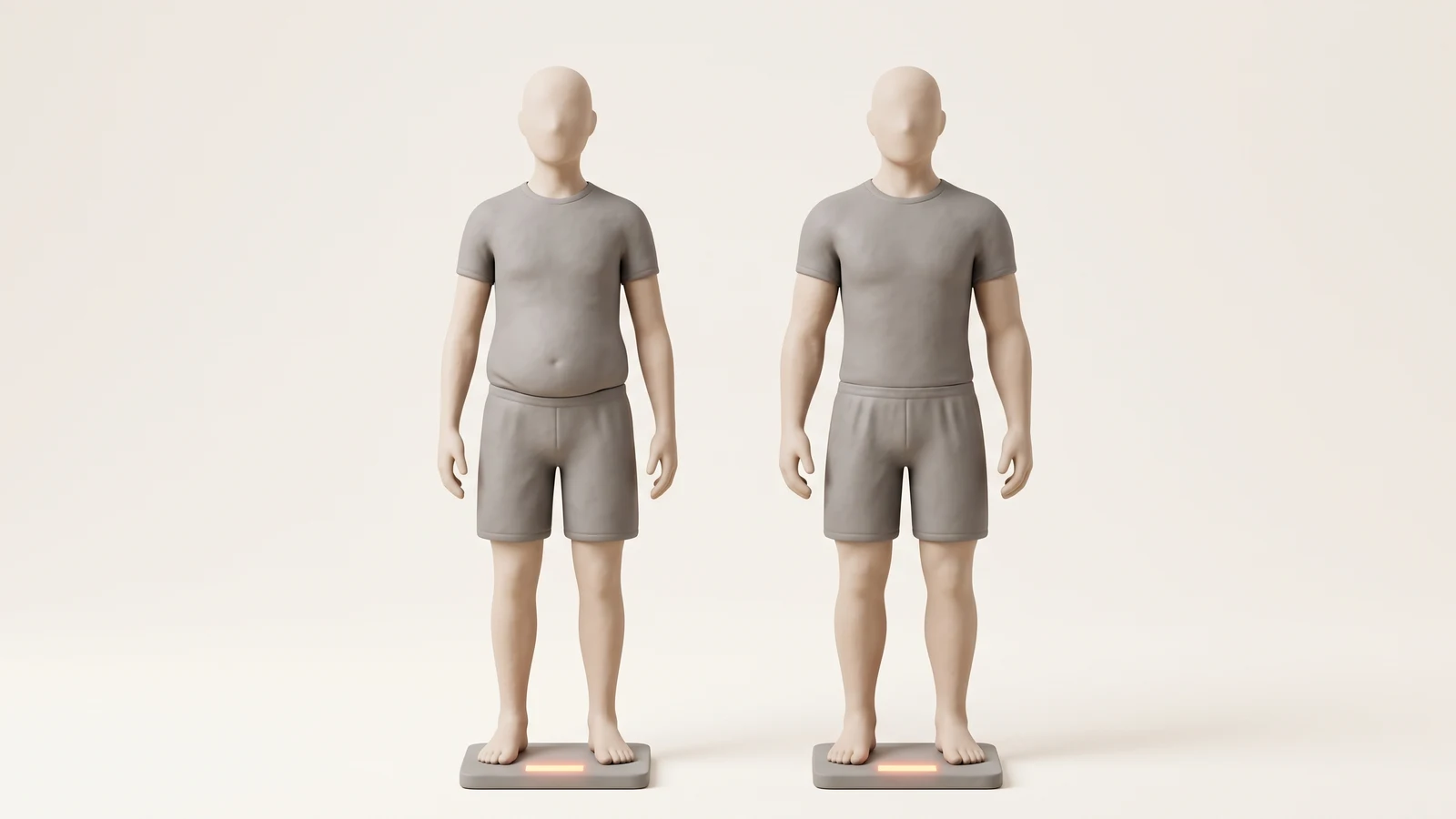
"Skinny fat" describes a body that looks slim in clothes and sits at a normal weight, but carries relatively little muscle and a higher share of body fat, often around the belly. It is not a medical diagnosis. Researchers study a close cousin called normal-weight obesity: a normal BMI combined with a high body-fat percentage. Both mean your weight can look fine while your body composition doesn't.
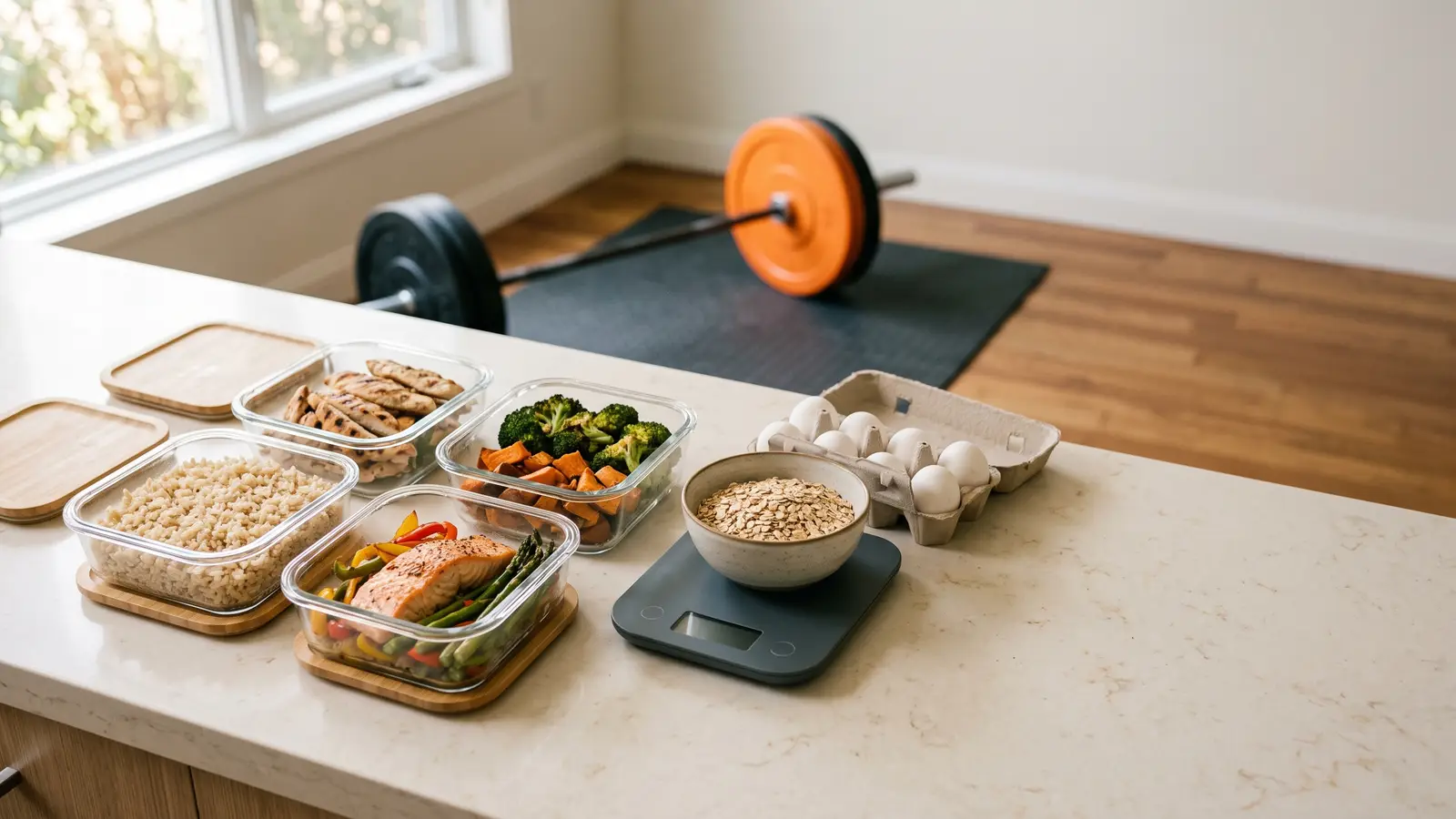
The fix is not to diet harder. Eating less tends to make a skinny fat body smaller, not firmer. What changes it is body recomposition: lifting weights progressively, eating enough protein, and keeping calories around maintenance or in a small deficit. Because the scale barely moves during that process, you track it with consistent progress photos and a tape measure instead.
Key takeaways
- Skinny fat means normal weight, low muscle and relatively high body fat. BMI and the scale can't see it.
- Research on normal-weight obesity links that pattern to higher cardiometabolic risk, which is a reason to act, not to panic.
- The fix is strength training two to three times a week, enough protein, and maintenance or a modest deficit.
- Expect the scale to stay roughly flat. Judge progress by photos, your waist and your training log.
What is skinny fat?
Body weight is the sum of two very different things: lean mass (muscle, bone, organs, water) and fat mass. Two people can weigh exactly the same and split that weight very differently. Someone who is skinny fat sits on the lean-light side of that split.
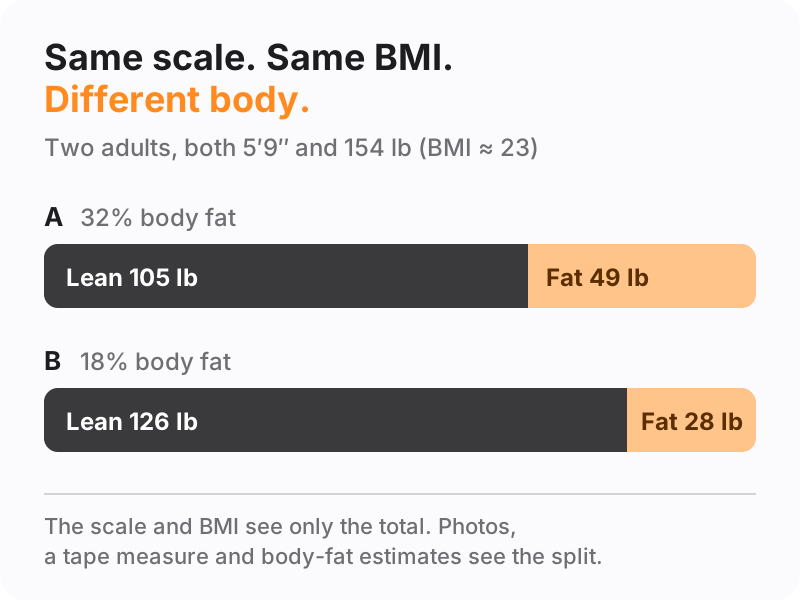
The medical literature calls the extreme version normal-weight obesity. A Mayo Clinic review describes it as a normal body weight by BMI with a high body-fat percentage, and notes that it is associated with a higher risk of metabolic syndrome and cardiometabolic dysfunction. The authors argue obesity should be defined by adiposity, not body weight (Oliveros et al., 2014).
Not everyone who feels skinny fat meets that definition. Many people simply have little muscle and a soft midsection after years of sitting, dieting or cardio-only training. The fix is the same either way.
What causes it
- Low resistance training. Muscle is built and kept by challenging it. Inactive adults lose roughly 3% to 8% of their muscle mass per decade (Westcott, 2012).
- Repeated dieting without lifting. Cutting calories with no strength stimulus can take some muscle along with the fat.
- Low protein. Muscle needs raw material, especially when you are eating at or below maintenance.
- Genetics, age and hormones. Where you store fat and how easily you build muscle vary from person to person.
Why the scale and BMI miss it
BMI is weight divided by height squared. It is a quick population screen, but it has no idea what the weight is made of. That's why a skinny fat body usually lands in the "normal" range and gets no flag at all.
That blind spot matters. In a study of 6,171 adults with a normal BMI from the US NHANES III survey, the people in the highest third for body fat (above 23.1% for men and 33.3% for women) had metabolic syndrome four times as often as those in the lowest third. Women in that group also had about 2.2 times the risk of cardiovascular death over a median 8.8 years of follow-up (Romero-Corral et al., 2010).
The scale has the same blind spot during the fix. When you lose a little fat and gain a little muscle, the two changes partly cancel out. The chart below shows what that often looks like: daily weigh-ins bounce, and after the first couple of weeks the trend goes flat while your waist keeps shrinking.
Illustrative data: twelve weeks of daily weigh-ins starting at 152 lb. The trend dips about half a pound in the first two weeks, then holds flat for ten more while the waist measurement keeps going down. For a skinny fat recomp, a flat scale is expected.
What does skinny fat look like?
There's no single skinny fat body type, but a few signs show up again and again:
- You look slim or average in clothes, but soft without them.
- Fat collects at the belly and lower back while arms, shoulders and legs look thin.
- Little visible muscle shape, even when you flex.
- Your BMI is normal, but a body-fat estimate comes back higher than you expected.
- Everyday strength feels low for your size: stairs, carrying groceries, a few push-ups.
Skinny fat in men vs. women
The pattern is the same; the typical numbers differ. Women naturally carry more essential body fat, so the thresholds used in research are higher for women (the NHANES study above used 33.3% for women and 23.1% for men). In skinny fat men, it often shows as a soft belly and chest with narrow shoulders and thin arms. In skinny fat women, it often shows as softness at the midsection, hips and upper arms with little muscle tone, sometimes after years of restrictive dieting. If you want a number to start from, the body fat percentage calculator uses the tape-measure Navy method, and our guide to body fat percentage pictures shows what ranges tend to look like.
How to get rid of skinny fat
Think "build, then reveal," not "shrink." The goal is more muscle and less fat at about the same weight. That's body recomposition, and it rests on three habits.
- Lift progressively, two to three times a week. Full-body sessions built on big movements, with the weight or reps creeping up over time.
- Eat enough protein. A meta-analysis of 49 trials found muscle gains from lifting leveled off around 1.6 g of protein per kg of body weight per day (Morton et al., 2018).
- Eat at maintenance or a small deficit. A big cut shrinks you further; a big surplus adds fat. Hold steady and let training do the work.
Should you bulk or cut?
This is the most common skinny fat question, and for most people the answer is neither. Cutting hard tends to leave you smaller but still soft. Bulking adds fat you already have plenty of. Recomposition sits in the middle, and it works best for exactly the people who tend to be skinny fat: beginners and those returning to training. Our guide to body recomposition before and after covers the evidence and timeline in more depth, and the body recomposition calculator gives you a starting calorie and protein target to plan from.

Cardio, sleep and patience
Cardio is good for your heart and still worth doing; the CDC recommends 150 minutes of moderate activity a week alongside at least two days of muscle strengthening (CDC). It just isn't what changes a skinny fat physique. Sleep and consistency are what make the lifting stick.
Strength training for skinny fat: a starter plan
You don't need a fancy program. You need the same handful of movements, done consistently, getting a little heavier over time. Ten weeks of resistance training can add about 1.4 kg of lean weight and remove about 1.8 kg of fat (Westcott, 2012), exactly the kind of change a scale hides.
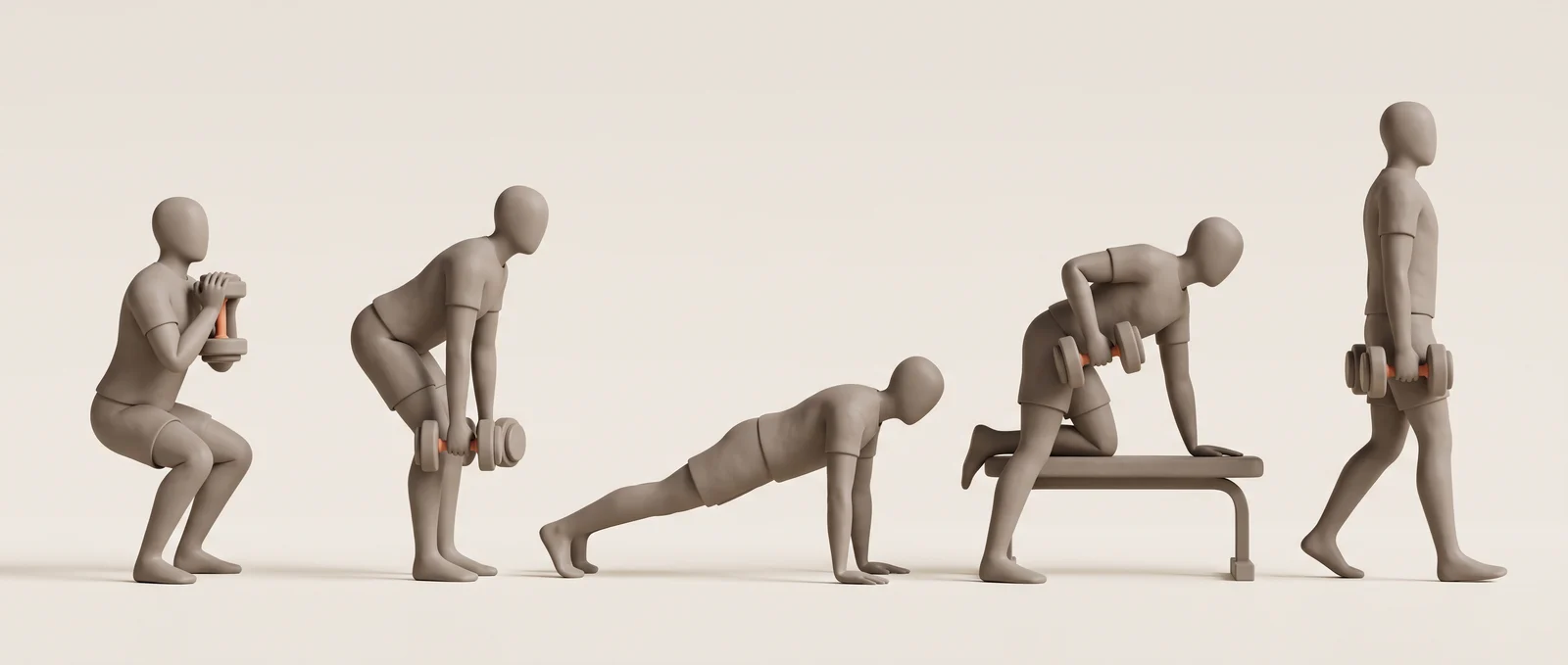
A simple full-body session, done two or three times a week on non-consecutive days:
| Exercise (pattern) | Sets × reps |
|---|---|
| Goblet squat (squat) | 3 × 8–12 |
| Romanian deadlift (hinge) | 3 × 8–12 |
| Push-up or incline push-up (push) | 3 × max good reps |
| One-arm dumbbell row (pull) | 3 × 10–12 per side |
| Farmer's carry (carry) | 3 × 30–40 sec |
When you can hit the top of a rep range on every set with good form, go slightly heavier next session. That's progressive overload, and it's the engine of every skinny fat workout that works.
- Take baseline photos: front, side and back, same spot and light
- Measure your waist at the navel after a normal exhale
- Lift two to three full-body sessions a week
- Log every exercise, weight, set and rep
- Add a rep or a little weight when you top out a range
- Hit your protein target most days
- Keep calories near maintenance; don't crash diet
- Sleep seven or more hours a night
- Retake photos and your waist measurement at week four

How long does it take to fix skinny fat?
Slower than you'd like, faster than you'd think if you're consistent. A realistic picture:
You get stronger
Lifts climb quickly as you learn the movements. The mirror looks the same and the scale may tick up a little from water and glycogen in your muscles. That's normal; take your baseline photos now.
Clothes start to fit differently
Shirts sit differently across the shoulders and waistbands loosen slightly. Your waist measurement may start to drop while your weight holds.
Photos catch up
Side-by-side photos start to show more shape in the shoulders and arms and a flatter midsection, provided they're taken the same way each time.
A different body at a similar weight
Progress slows but keeps compounding. Comparing against your very first session matters more than comparing this month to last.
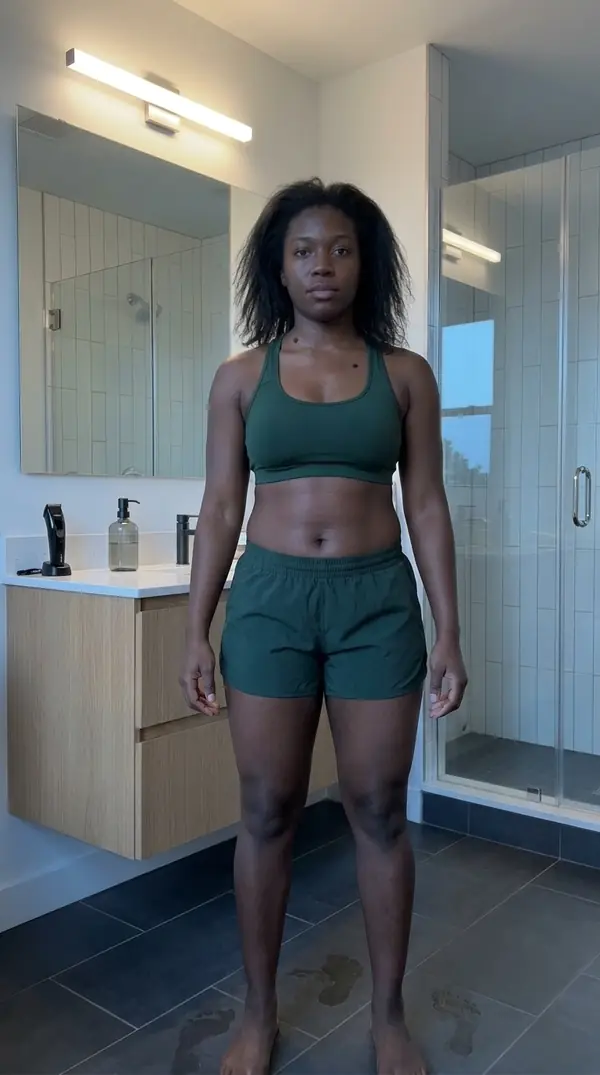
For a broader view of realistic change over different spans, see our body transformation timeline. And if the scale is flat and nothing else is moving either, our guide to the weight loss plateau helps you tell a stall from a recomp.
How to see it working: photos and measurements
Since fixing skinny fat barely moves the scale, you need tools that see shape. Three work well together:
- Progress photos every two to four weeks. Front, side and back, same spot, same light, same distance, same time of day. Our guide on how to take progress photos covers the setup.
- Your waist measurement on photo day. Same tape, same spot, after a normal exhale. A shrinking waist at a steady weight is the clearest sign of recomposition.
- A training log. Rising numbers at the same bodyweight mean you're adding muscle. Every few months, the FFMI calculator turns your lean mass into one number you can recheck.
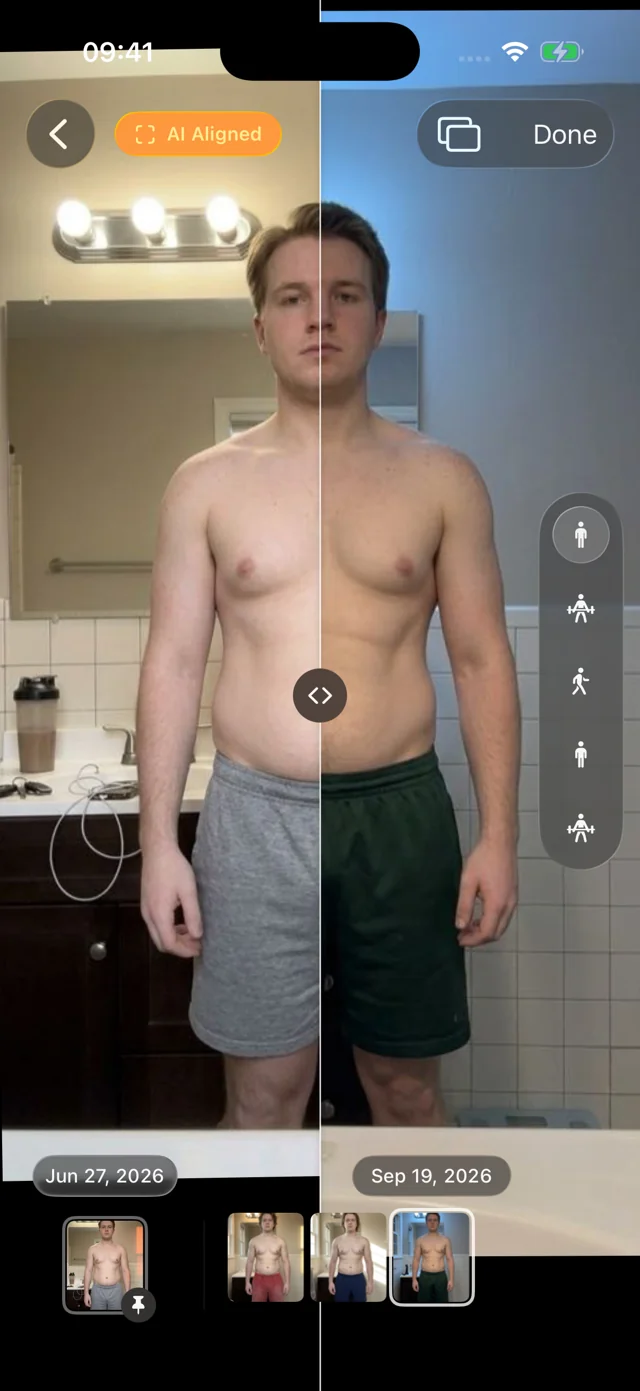
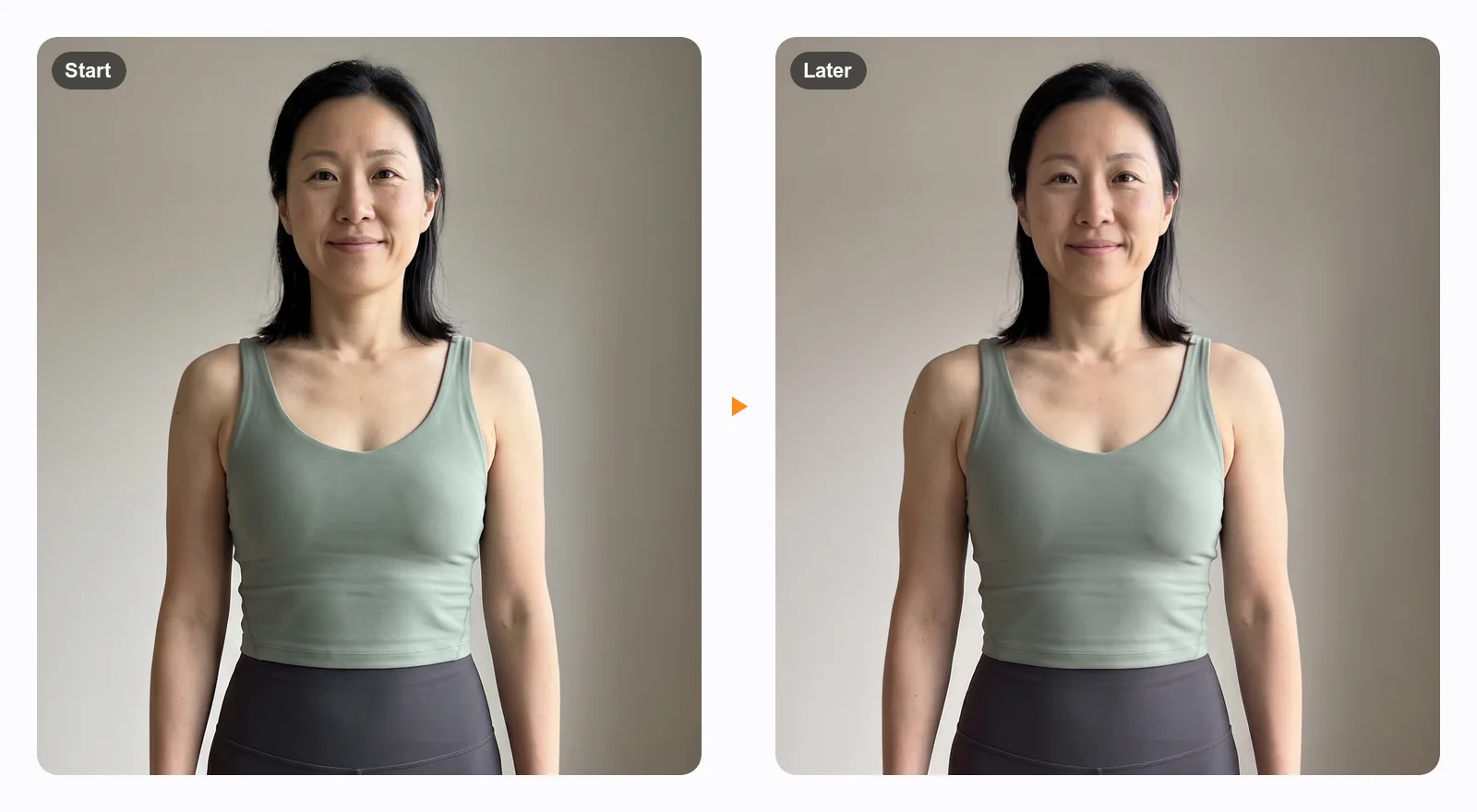
Here is the kind of change you're watching for: more shape in the shoulders and arms and a tighter midsection, at a similar size overall. Drag the divider.
Changes like these are subtle, and small differences in framing can hide them completely. That's what Progress is for. Every photo is AI aligned on your iPhone, so session one and session sixteen line up and the only thing that changes is you. Hands-free capture walks you through five poses in about a minute, and you can log weight and body-fat percentage with each session, typed in or pulled from Apple Health. No account is needed, and your personal data never leaves your iPhone.
FAQ
What does skinny fat mean?
It means having a normal or low body weight with relatively little muscle and a higher share of body fat, often around the belly. It's a fitness term rather than a diagnosis; the research term for the more extreme version is normal-weight obesity.
Should I bulk or cut if I'm skinny fat?
For most people, neither. A recomp, eating near maintenance or in a small deficit while lifting progressively and eating enough protein, builds muscle and trims fat at the same time. If you have health conditions, ask a clinician or registered dietitian.
Can you fix skinny fat without going to the gym?
Yes, as long as the training is progressive. Dumbbells, resistance bands or harder bodyweight variations at home all work if the challenge keeps increasing. Walking and cardio are healthy but won't build much muscle on their own.
Is skinny fat unhealthy?
Not automatically, but research on normal-weight obesity links a normal BMI with high body fat to more metabolic syndrome and other cardiometabolic risk factors. A checkup with your clinician is the way to know where you stand; strength training is a well-supported step either way.