Progress
Lean Bulk: Surplus, Gain Rate and When to Stop
How to lean bulk: the right calorie surplus for your training age, how fast to gain, protein, and how to spot gaining too fast with your waist and photos.
On this page 8 sections
A lean bulk is a muscle-building phase where you eat a small calorie surplus, roughly 5 to 20% above maintenance depending on how long you've been training, so your weight climbs slowly (about 0.25 to 0.5% of bodyweight per week for most lifters, less if you're advanced) and most of what you gain is muscle rather than fat. It's the opposite of a "dirty bulk," where you eat everything in sight and the scale rockets up.
How to lean bulk comes down to four things: pick a surplus that fits your training age, eat enough protein, train with progressive overload, and watch three signals every few weeks (the scale trend, your waist, and consistent progress photos) so you can adjust before the extra calories turn into extra fat.
Key takeaways
- A lean bulk is a small, deliberate surplus: about 10–20% for beginners and intermediates, closer to 5–10% for advanced lifters.
- Aim for roughly 0.5–2% of bodyweight per month, slower the longer you've trained.
- Bigger surpluses mostly add fat, not extra muscle or strength (Helms et al., 2023).
- Judge it by the 7-day weight trend, your waist and photos every 2–4 weeks, not by single weigh-ins.
What is a lean bulk?
A lean bulk (sometimes called a "clean bulk" or "slow bulk") is a planned period of eating slightly more than you burn while lifting hard, so your body has the energy to build new muscle without storing much excess fat. The goal, in the words of a 2019 review of off-season bodybuilding nutrition, is "to increase muscle mass without adding unnecessary body fat" (Iraki et al., 2019).
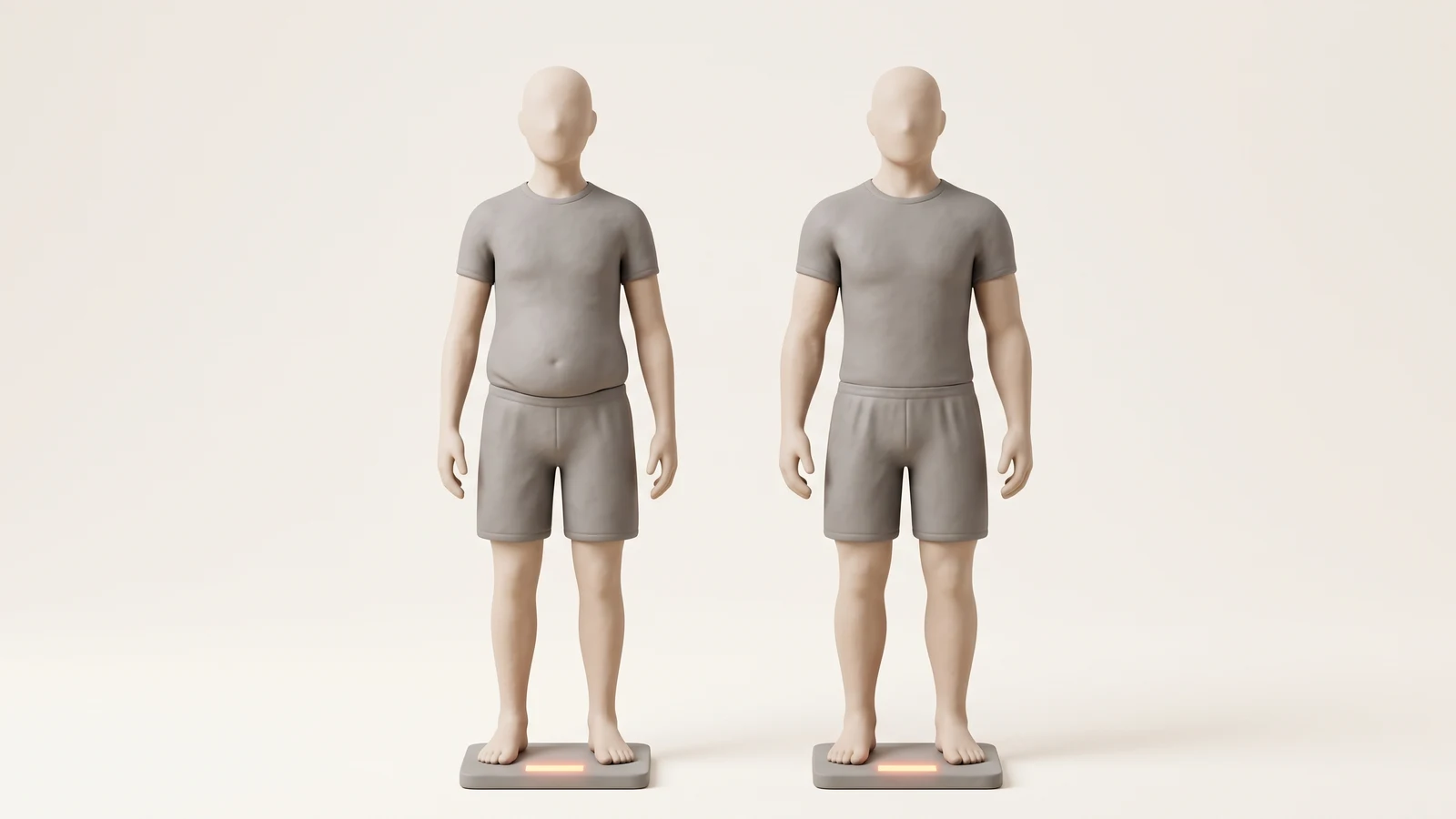
The word "lean" refers to the size of the surplus, not to your starting body fat. You still gain weight on a lean bulk; you just gain it slowly enough that your waist doesn't run away from you.
Lean bulk vs. dirty bulk vs. recomp
| Approach | Calories | Rate of gain | Fat gain | Often suits |
|---|---|---|---|---|
| Lean bulk | Small surplus (5–20%) | 0.5–2% of bodyweight a month | Some, kept in check | Most lifters who want to add size |
| Dirty bulk | Large, unplanned surplus | As fast as the scale goes | A lot | Rarely the best choice |
| Recomp | Maintenance or a small deficit | Scale barely moves | Fat goes down | Beginners, returning lifters, higher body fat |
So which is better, lean or bulk? If "bulk" means a big, open-ended surplus, the evidence leans toward lean. In an eight-week trial of trained lifters, a 15% surplus increased skinfold thickness (a proxy for fat) more than eating at maintenance, and across all participants faster bodyweight gain mainly predicted more fat gain, not more muscle or strength (Helms et al., 2023). An earlier study in elite athletes found the same pattern: athletes on a planned surplus gained more weight and much more fat than athletes eating freely, with no difference in lean mass gained (Garthe et al., 2013).
If you're new to lifting or carrying more body fat, you may not need a surplus at all yet. Our body recomposition guide covers building muscle at maintenance.
How big should your lean bulk surplus be?
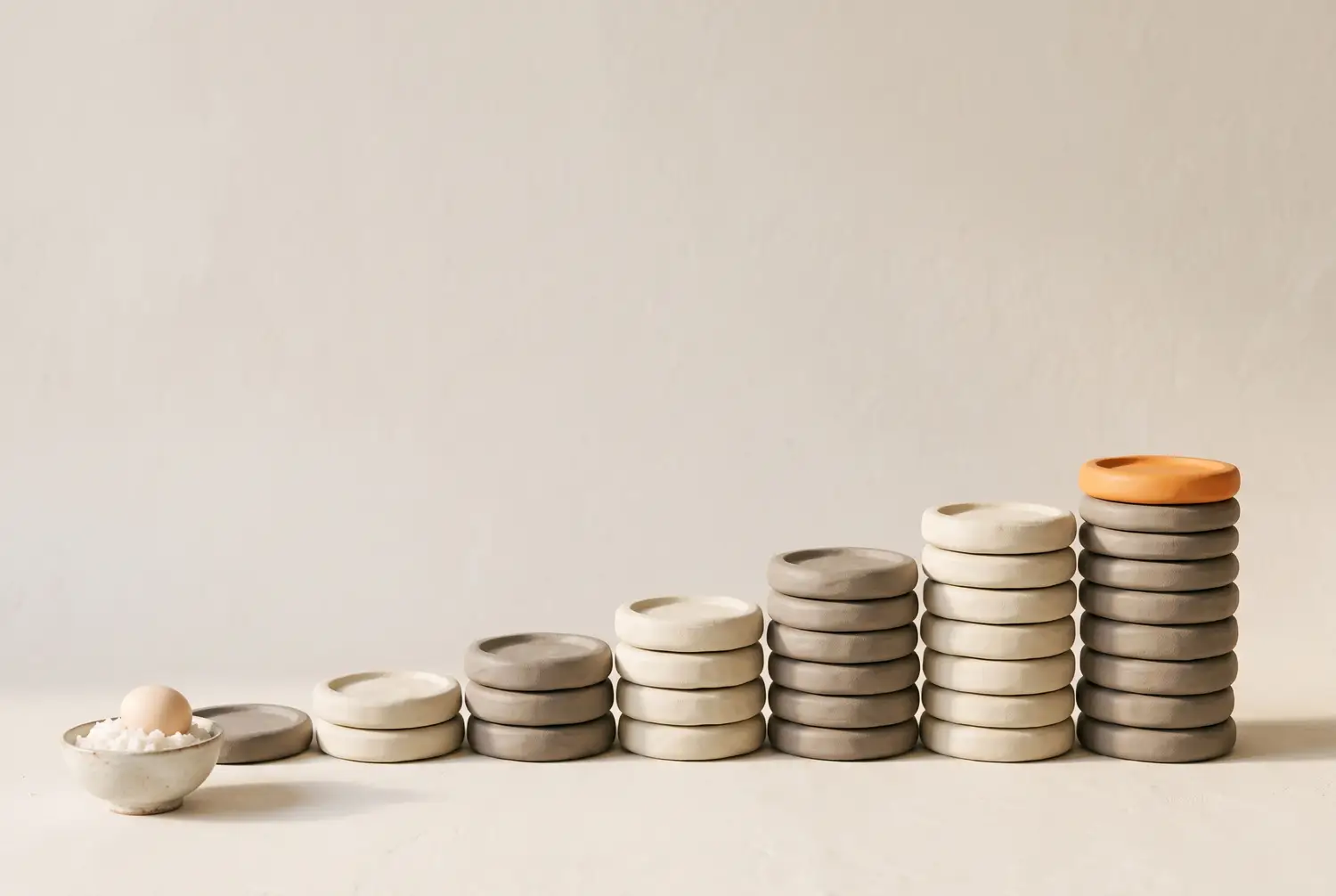
The Iraki review recommends a surplus of about 10 to 20% above maintenance, targeting about 0.25 to 0.5% of bodyweight gained per week for novice and intermediate lifters, and says advanced lifters "should be more conservative with the caloric surplus and weekly weight gain." The reason is simple: the closer you are to your muscular potential, the slower you can build muscle, so the same surplus spills over into more fat.
Step through the three stages below.
Less than about 1 year of consistent lifting
Surplus: about 10–20% above maintenance (roughly 250–500 kcal a day for many people).
Target gain: about 0.35–0.5% of bodyweight per week, or 1.5–2% per month.
Muscle comes fastest now, so a slightly bigger surplus is used well. If you're above roughly average body fat, consider a recomp first.
About 1 to 3 years of steady progress
Surplus: about 10–15% above maintenance (roughly 200–350 kcal a day).
Target gain: about 0.25–0.35% of bodyweight per week, or 1–1.5% per month.
Gains are still steady but slower. This is where most people overshoot: if the waist climbs quickly, trim the surplus.
3+ years, close to your potential
Surplus: about 5–10% above maintenance (roughly 100–250 kcal a day).
Target gain: about 0.1–0.25% of bodyweight per week, or 0.5–1% per month.
Muscle gain is slow, so the surplus should be small. Some advanced lifters progress almost as well near maintenance.
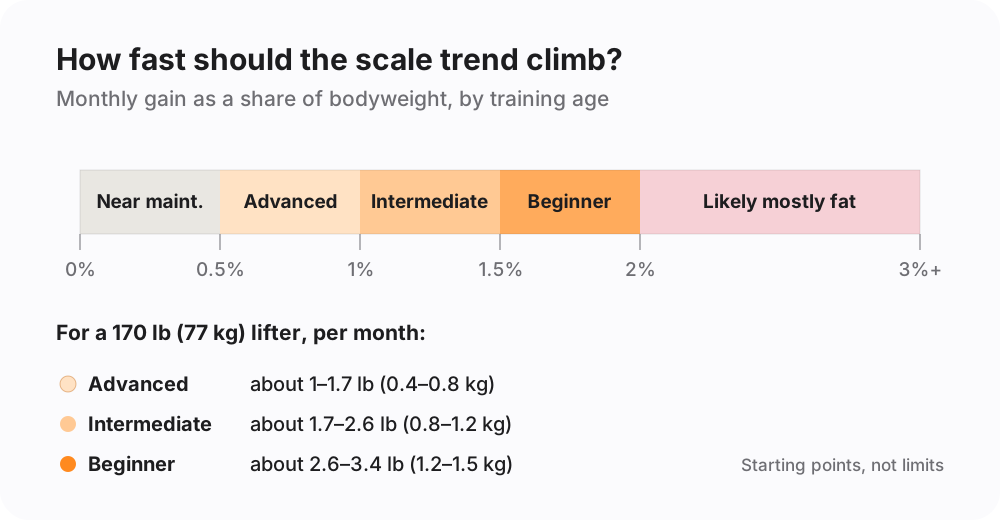
Lean bulk calculator
Enter your bodyweight and maintenance calories. If you don't know your maintenance, the body recomposition calculator estimates it, or use the average intake over two weeks where your weight held steady.
By hand: multiply maintenance calories by 1.10–1.20 (beginner), 1.10–1.15 (intermediate) or 1.05–1.10 (advanced). Multiply bodyweight by 0.0035–0.005, 0.0025–0.0035 or 0.001–0.0025 for your weekly target gain. Protein: 1.6–2.2 g per kg of bodyweight a day.
How to lean bulk, step by step
- Find your maintenance. Track what you eat for two weeks. If your 7-day average weight holds steady, that intake is your maintenance.
- Add a small surplus. Use the calculator above for your training age. Start at the low end; it's easier to add food than to lose fat.
- Hit your protein. About 1.6–2.2 g per kg of bodyweight a day, spread over 3–6 meals.
- Train with progressive overload. The surplus only builds muscle if your training asks for it: add reps, weight or sets over time.
- Check in every 2–4 weeks. Compare the weight trend, your waist and your progress photos, then adjust by 100–150 kcal a day if needed.
Training matters as much as food. A surplus without a hard, progressive program is just weight gain. Keep a training log so you can see whether your lifts actually climb with the scale.
The lean bulk diet
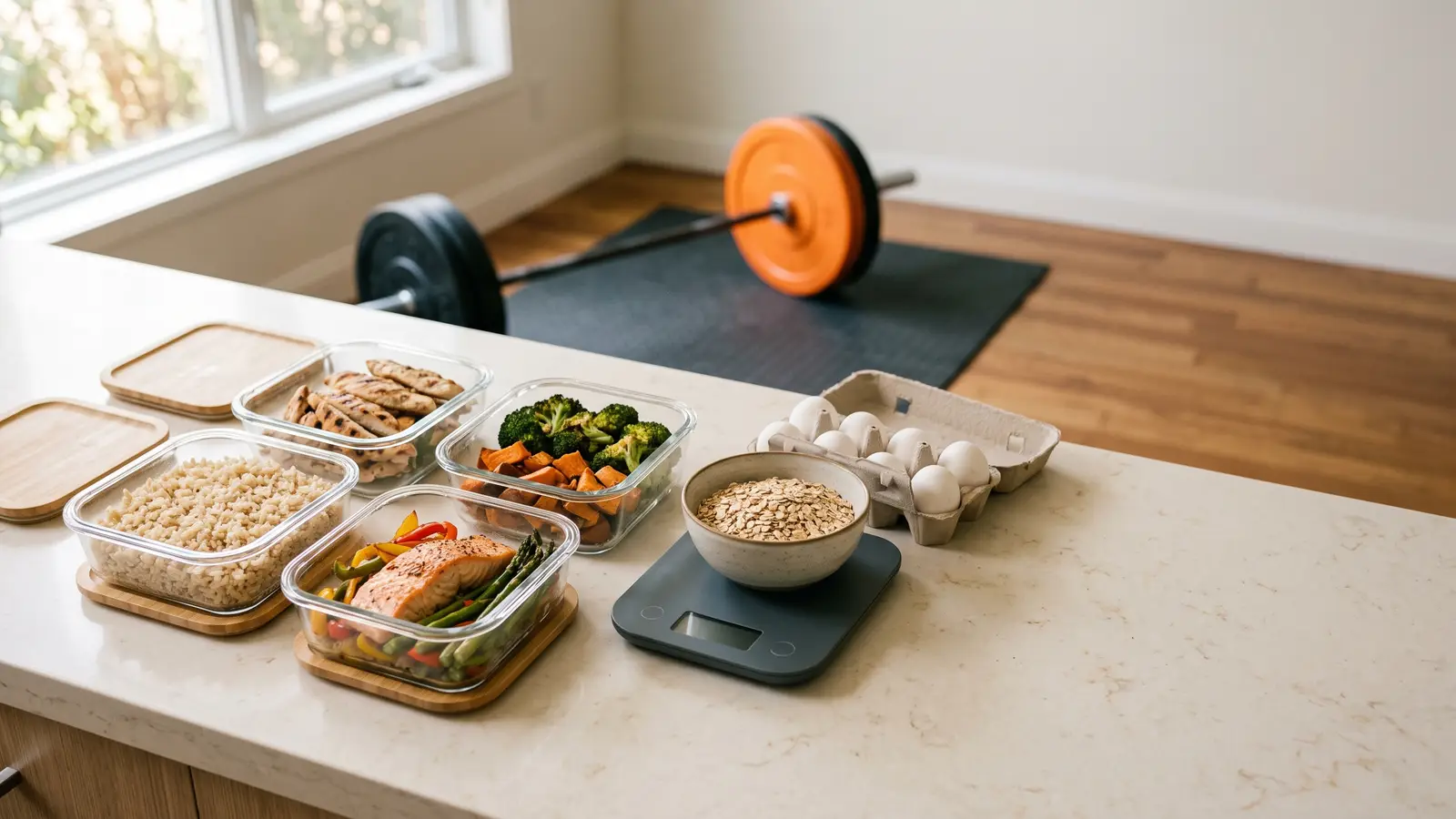
There's no special lean bulk diet. You need enough total calories, plenty of protein, and mostly whole foods so the surplus is easy to hit without feeling stuffed. The Iraki review's ranges for off-season lifters are a good framework:
Protein has the strongest evidence. A large meta-analysis of 49 trials found that gains in fat-free mass from resistance training leveled off at around 1.6 g per kg of bodyweight a day, with an upper confidence bound of about 2.2 g/kg (Morton et al., 2018). For a 77 kg (170 lb) lifter, that's roughly 125–170 g a day. Fill the rest of your calories with carbohydrates, which fuel hard training, and a moderate amount of fat.
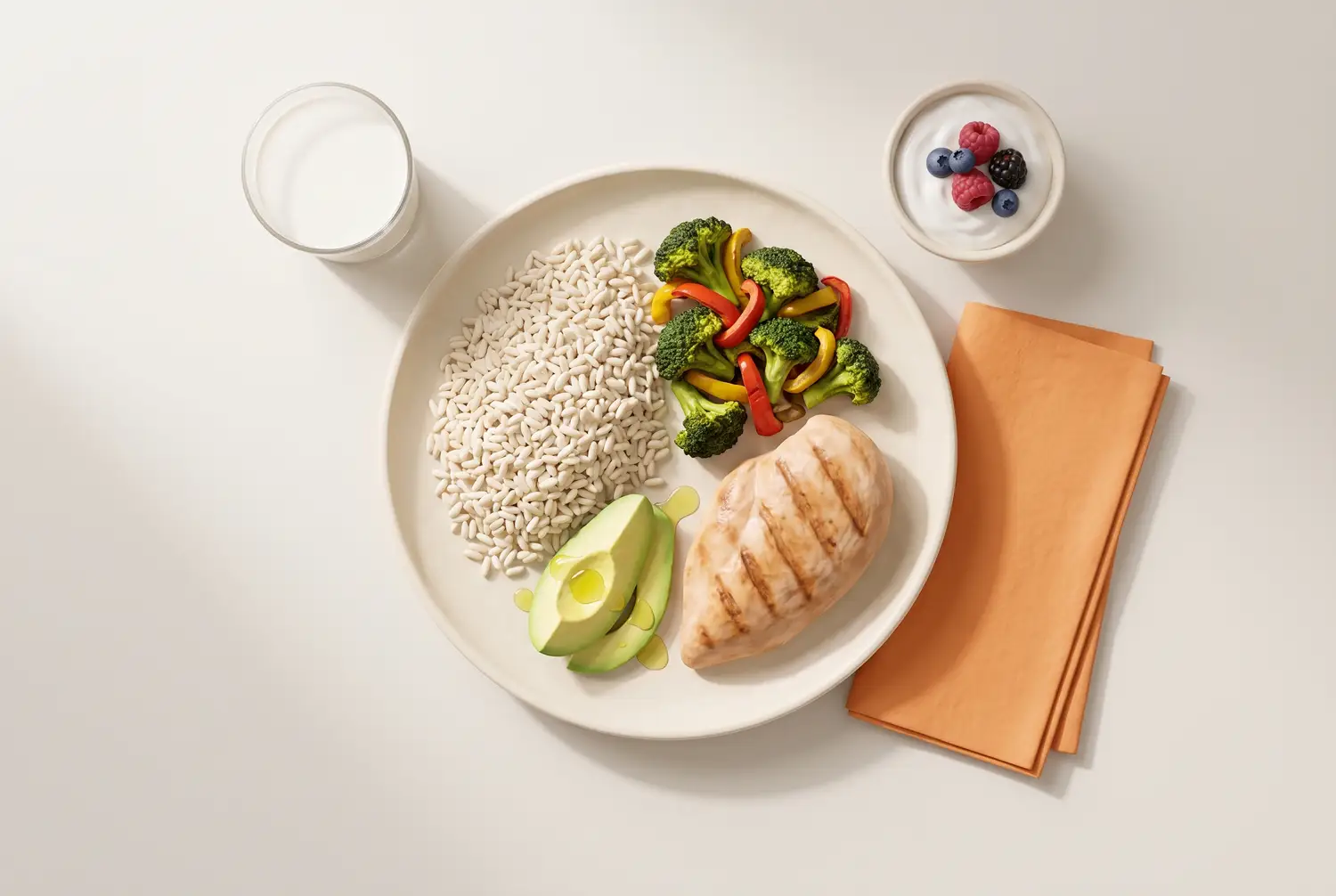
Good foods for a lean bulk: chicken, fish, eggs, Greek yogurt, milk, lean beef, tofu and legumes for protein; rice, oats, potatoes, pasta, bread and fruit for carbs; olive oil, nuts, nut butters and avocado for fats. If you struggle to eat enough, lean on calorie-dense foods (milk, oats, nut butter, rice) and liquid calories rather than adding more large meals. The Slater et al. review notes that managing appetite is a real practical challenge when trying to increase intake.
How to tell if you're gaining too fast
The scale alone can't tell muscle from fat, and day-to-day water swings can be bigger than a whole week of real gain. Look for three signals agreeing over 2–4 weeks.
1. The weight trend, not the daily number
Drag across the chart below: twelve weeks of a well-paced lean bulk for a 165 lb lifter. Single weigh-ins bounce by a couple of pounds, while the 7-day trend climbs about 5 lb over twelve weeks, a little over 1% of bodyweight a month.
Illustrative data: twelve weeks of daily weigh-ins starting at 165 lb. Daily readings swing by up to a couple of pounds from water and food, while the 7-day trend rises steadily by about 5 lb in total, roughly 1% of bodyweight a month, an intermediate lean bulk pace.
Compare the trend's monthly change with the targets above. If it's climbing faster than about 2% a month (or faster than your training age suggests), trim 100–150 kcal a day and recheck in three weeks.
2. Your waist
Measure your waist at your navel, after a normal exhale, on the same morning each week or two. On a good lean bulk, the waist creeps up slowly, if at all, while your weight trend rises and your chest, arms and thighs fill out. If your waist is rising about as fast as your weight, most of what you're adding is probably fat. Tracking waist-to-height ratio over the bulk gives you one number to watch.
3. Consistent progress photos
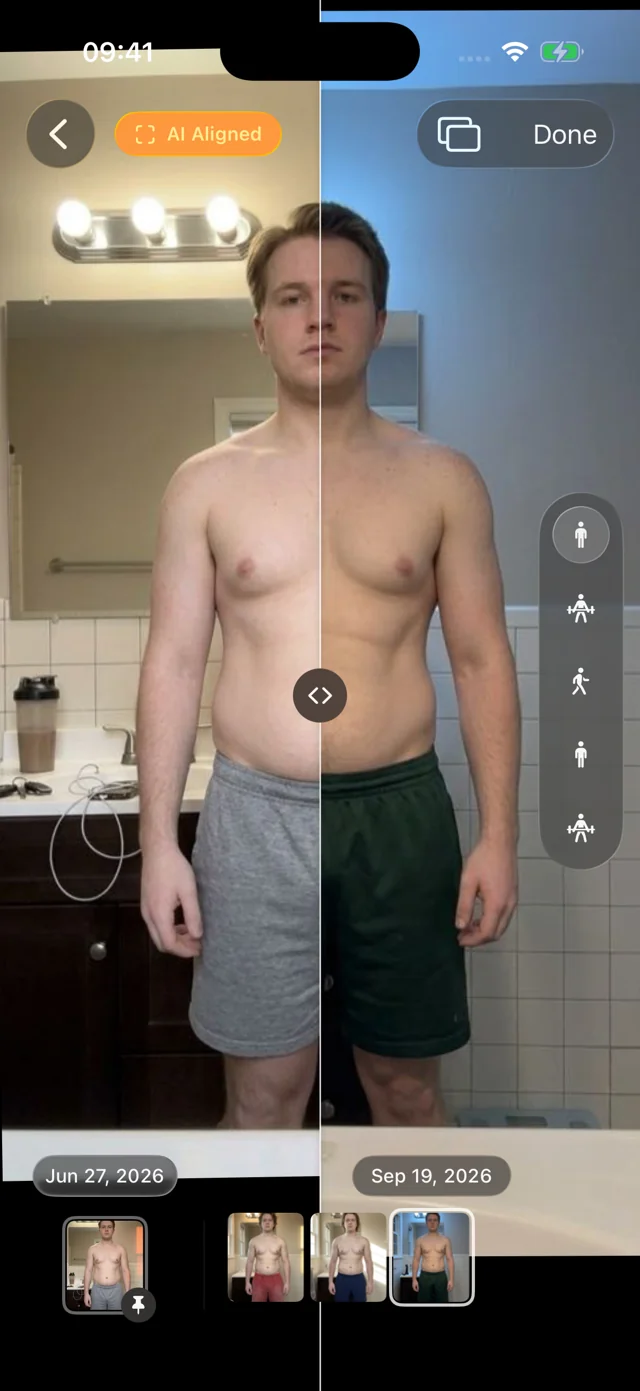
Photos show where the weight is going: shoulders, back and legs, or mainly the midsection. Take them every 2–4 weeks with the same five poses, the same distance, the same light and the same time of day. Front flexed and back flexed poses are especially useful on a bulk, because they show muscle that relaxed poses hide. See how to take progress photos for the full setup and the progress photo poses guide for cues.
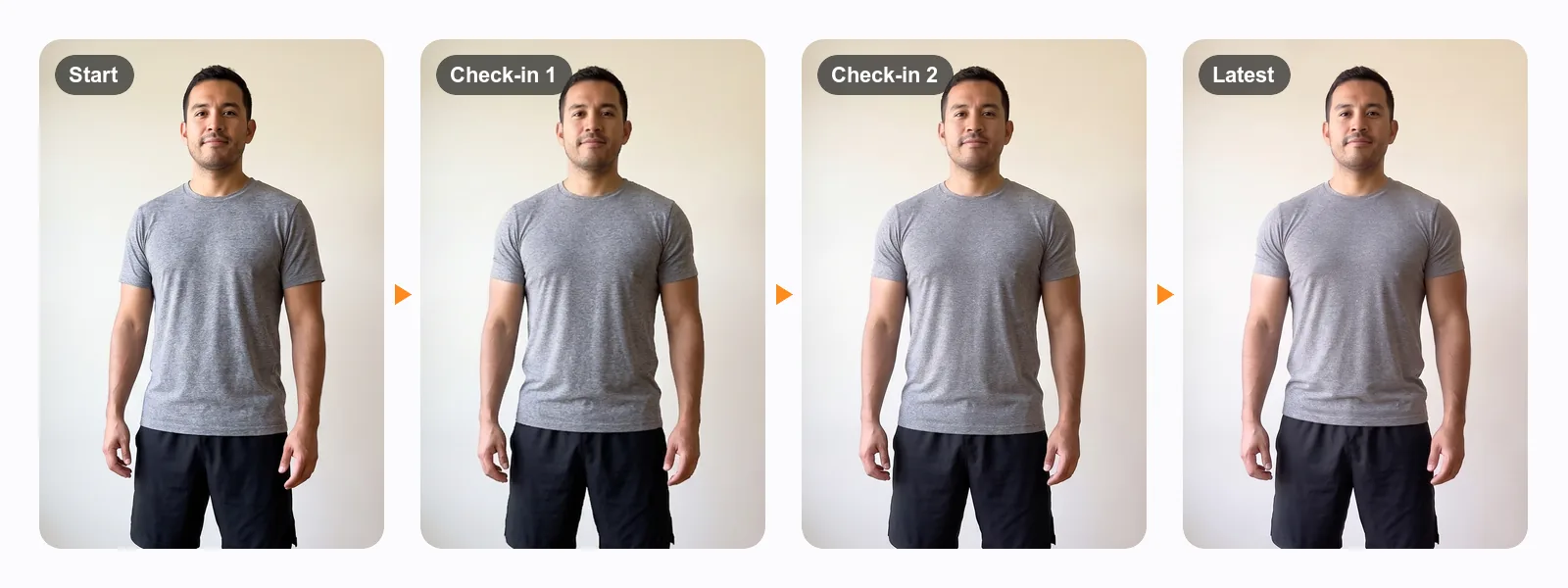
The trouble is that lean bulk changes are small: a pound or two a month. Shift your phone a little, stand a step closer or shoot in different light, and a real change disappears, or a fake one appears. Progress solves that: every photo is AI aligned on your iPhone, so week 1 and week 12 line up and you can slide a divider between any two sessions, or pin your starting photos as a reference and scrub everything since. Hands-free capture walks you through all five poses in about a minute, and you can log your weight with each session or pull it from Apple Health.
What the signals mean together
| Weight trend | Waist | Photos | What it probably means |
|---|---|---|---|
| Rising on target | Flat or slowly up | Fuller shoulders, back, legs | Keep going |
| Rising too fast | Rising quickly | Softer midsection | Cut the surplus by 100–150 kcal |
| Flat | Flat | No change | Add 100–150 kcal |
| Rising on target | Rising quickly | Mostly midsection | Check training and sleep; trim the surplus |
When to stop a lean bulk
A lean bulk isn't open-ended. Most people run one for several months, then move to a maintenance or fat-loss phase. Good reasons to stop:
- Your waist has grown more than you're comfortable with, even though the gain rate looked fine.
- Your photos show the midsection changing more than your shoulders, back and legs.
- Your lifts have stalled for several weeks despite the surplus.
- Eating the surplus has become a chore that's hurting sleep, digestion or your enjoyment of food.
- You've reached the size you wanted, or the end date you set when you started.
- Your clinician has advised against further weight gain.
When you stop, ease back to maintenance for a few weeks before any cut, so you can tell how much of your gain stays once the extra food and water settle. Your FFMI before and after the bulk is a useful way to express how much lean mass you added relative to your height.
How long does a lean bulk take?
Longer than social media suggests. At intermediate rates, 1–1.5% of bodyweight a month, a 170 lb lifter gains roughly 10–15 lb over a 6-month bulk, and only part of that is muscle. Visible change in photos usually takes a few months of consistent training and eating. For a realistic sense of what different time spans can show, see our body transformation timeline.
FAQ
Do lean bulks actually work?
Yes, for building muscle with less fat than a large surplus. In studies of trained lifters and athletes, faster weight gain mostly added fat, not extra muscle or strength, so a smaller surplus with progressive training gives a better ratio of muscle to fat.
How long does it take to lean bulk 20 lbs?
At typical lean bulk rates of 0.5–2% of bodyweight a month, gaining 20 lb usually takes somewhere between about 6 months and 2 years, depending on your size and training age. Trying to do it much faster mostly adds fat.
How do you lean bulk quickly?
You can't speed up muscle growth much by eating more. The fastest sensible lean bulk is the upper end of the range for your training age, with a hard, progressive program, enough protein and good sleep. Beyond that, extra calories mostly become fat.
What foods are good for a lean bulk?
Protein-rich foods (chicken, fish, eggs, Greek yogurt, milk, lean beef, tofu, legumes) plus carbohydrates that fuel training (rice, oats, potatoes, pasta, fruit) and moderate healthy fats (olive oil, nuts, avocado). Calorie-dense staples like milk, oats and nut butter help if you struggle to eat enough.