Progress
DEXA Body Fat Percentage: Accuracy, Prep and Results
What a DEXA scan body fat percentage really tells you: how accurate DEXA is, how to prepare, how to read the report, and how to make repeat scans comparable.
On this page 10 sections
- What a DEXA scan measures
- How to read a DEXA body fat report
- What is a good DEXA body fat percentage?
- How accurate is DEXA?
- DEXA vs BIA, calipers and the Navy method
- How to prepare for a DEXA scan
- How to make repeat DEXA scans comparable
- How much does a DEXA scan cost, and where can you get one?
- Fill the gaps between scans with photos and a tape
- FAQ
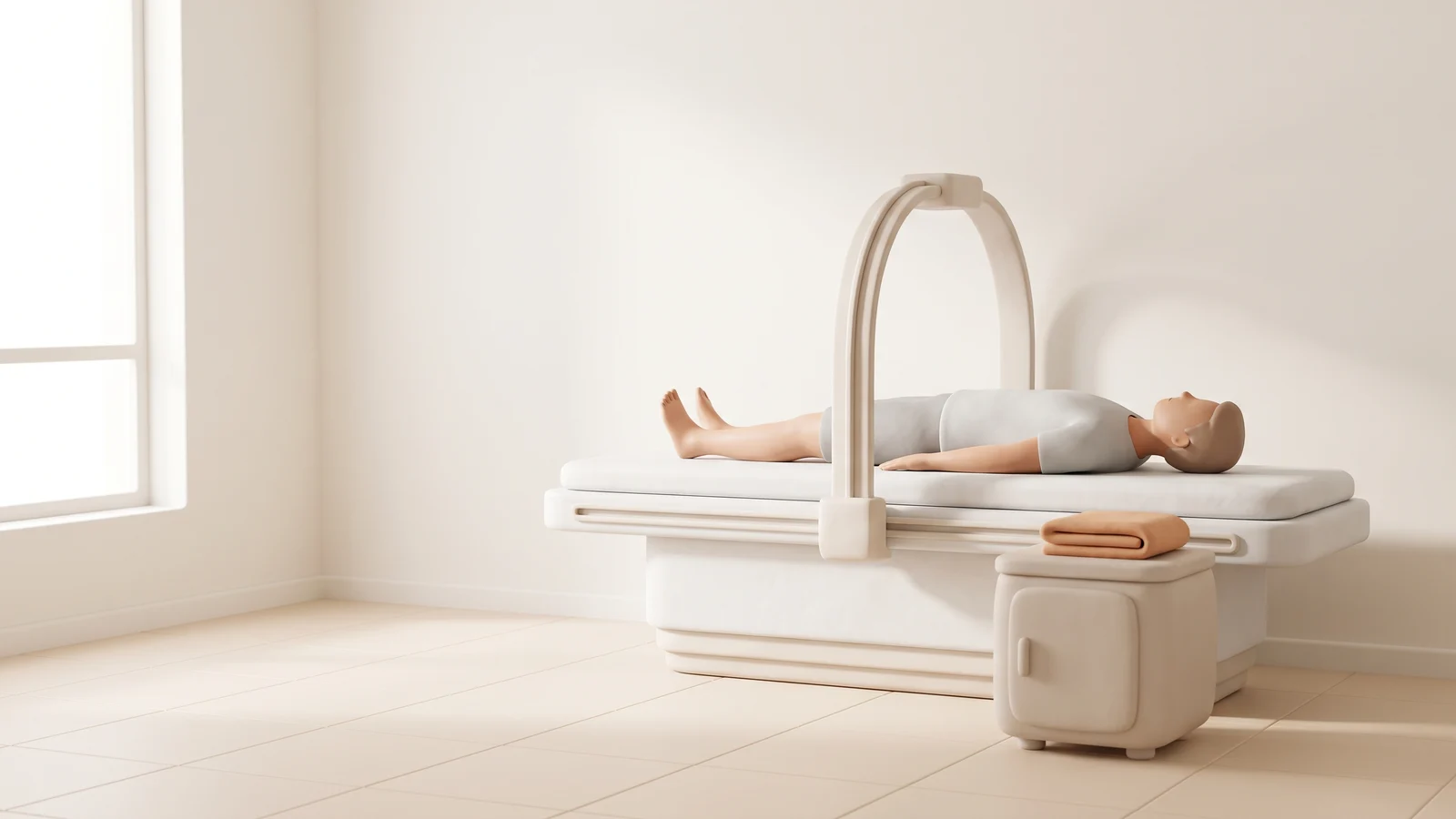
Your DEXA body fat percentage is your fat mass divided by your total body mass, measured by a whole-body scan that uses two low-dose X-ray energies to separate fat, lean tissue and bone. It takes a few minutes lying still on a padded table, and along with the headline number you get a breakdown by region (arms, legs, trunk), an estimate of visceral fat around your organs, and bone density.
DEXA is one of the most precise body fat measurements most people can book, but it isn't perfect. It can disagree with laboratory reference methods by several points for an individual, two scanner brands can read the same person differently, and what you ate and drank the day before can shift the result. Used well, with the same machine, the same preparation and enough time between scans, it's an excellent way to see whether your fat and lean mass are really changing.
Key takeaways
- DEXA splits your body into fat, lean soft tissue and bone, for the whole body and region by region.
- It's precise for repeat scans on the same machine, but any single number can be a few points off the "true" value.
- Food, fluid, training and glycogen move the result. Scan fasted, rested and at the same time of day.
- Different machines and software aren't interchangeable. Stay with one clinic and one scanner.
- Small changes between scans can be noise. Use the checker below before celebrating or worrying.
What a DEXA scan measures
DEXA (or DXA, dual-energy X-ray absorptiometry) passes two X-ray beams of different energies through your body as the scanning arm moves from head to toe. Bone, fat and lean tissue absorb the two energies differently, so software can work out how much of each sits in every small area of the image. Add those areas up and you get three compartments: fat mass, lean soft tissue (muscle, organs, skin and the water they hold) and bone mineral.
That's why a DEXA report says more than a single percentage. You'll usually see:
- Total body fat % and fat mass in pounds or kilograms.
- Lean mass, which is the number most lifters care about.
- Regional results for the arms, legs, trunk and sometimes each side separately, which shows where you store fat and whether one side carries more muscle.
- Android and gynoid fat, the belly and hip regions, and their ratio.
- Visceral adipose tissue (VAT), an estimate of the fat packed around your organs. In a validation study against CT, DXA visceral fat explained about 96% of the variation in the CT values (Kaul et al., 2012).
- Bone mineral density for the whole body.
The radiation is very low. A review in Quantitative Imaging in Medicine and Surgery puts a whole-body scan on a current densitometer at about 4–5 microsieverts, less than a day of natural background radiation (Messina et al., 2020). Tell the staff if you might be pregnant; DEXA isn't done during pregnancy (RadiologyInfo).
How to read a DEXA body fat report
Every clinic's printout looks different, but the core sections are the same. Here's an annotated sample for a made-up 35-year-old man who weighs 80 kg. The numbers are illustrative, but they add up the way a real report does.
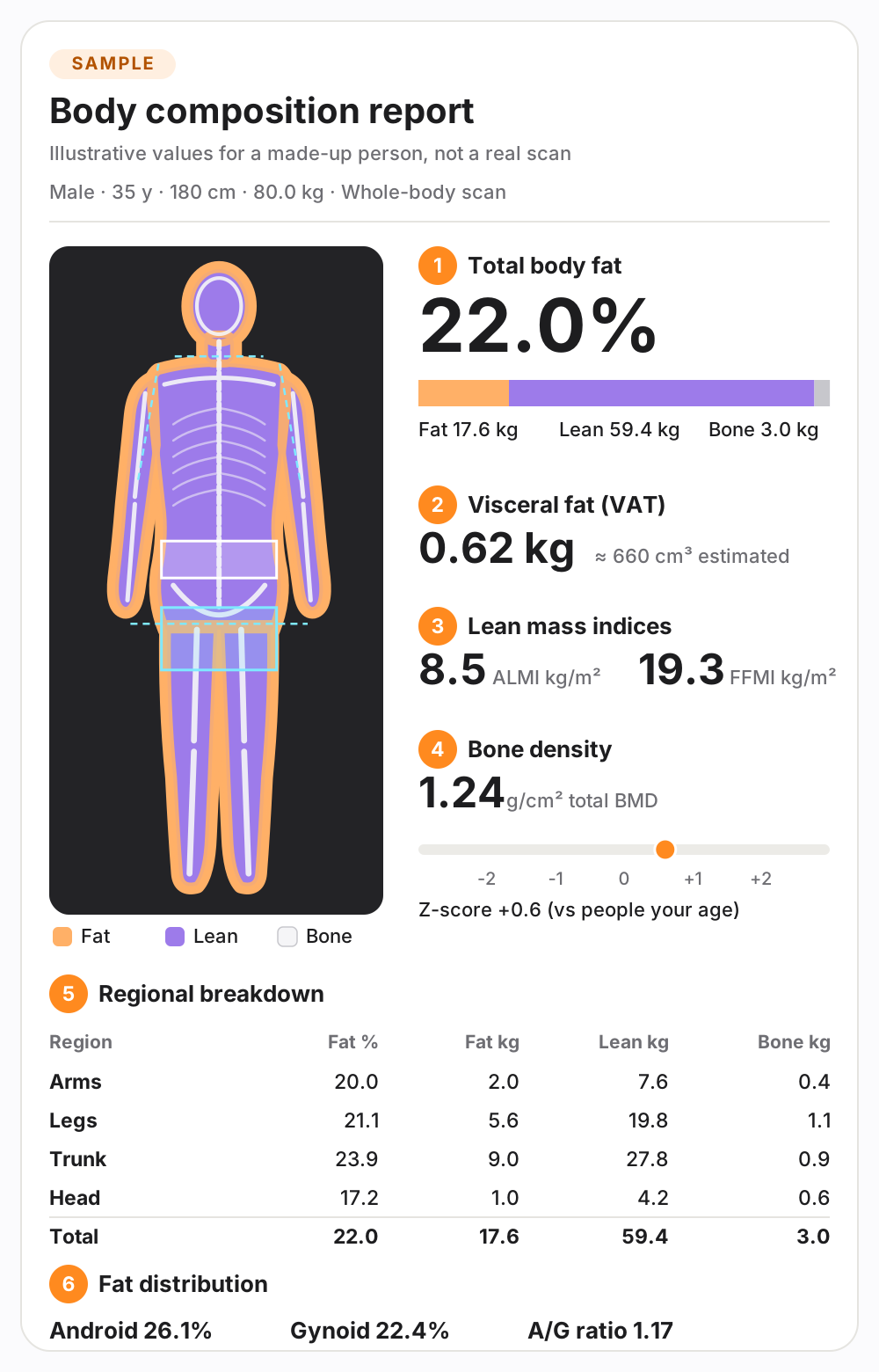
Step through each section:
Total body fat percentage
Fat mass divided by everything the scanner weighed. Because fat, lean and bone must add up to your body weight, a change in any one of them moves the percentage. Gaining 2 kg of lean mass at the same fat mass lowers your body fat percentage even though you've lost no fat, so always read the kilograms next to the percentage.
Visceral fat (VAT)
The scanner can't see a slice through your body the way CT does, so software estimates visceral fat from the belly region by subtracting the fat it attributes to the layer under the skin. It's a useful trend number. Visceral fat is the type most closely linked to metabolic risk, so if this one is high, discuss it with your doctor, not a gym.
Lean mass, ALMI and FFMI
Lean mass includes muscle but also organs, skin and the water and glycogen stored in muscle, so it rises after a big carbohydrate day and falls when you're depleted. Some reports add the appendicular lean mass index (ALMI: arm and leg lean mass divided by height squared), which clinicians use when screening for low muscle mass. FFMI is the same idea for your whole lean body; plug your numbers into the FFMI calculator to see where you sit.
Bone density
Body composition scans include total-body bone mineral density and usually a Z-score, which compares you with people of your age and sex. It's interesting context, but it isn't an osteoporosis test: that uses dedicated hip and spine scans and is read by a clinician.
Regional breakdown
Arms, legs, trunk and head, each with fat, lean and bone mass. The cut lines between regions are placed by software and adjusted by the technician, so small regional changes between scans are less reliable than the whole-body totals. Regional results are good for spotting patterns (most people carry the highest fat percentage on the trunk) and big left/right differences after an injury.
Android, gynoid and the A/G ratio
The android region is a band around the waist; the gynoid region covers the hips and upper thighs. Dividing one fat percentage by the other gives the A/G ratio. A higher ratio means you store proportionally more fat around your middle, which is typical for men; women usually have a lower ratio.
What is a good DEXA body fat percentage?
There's no special DEXA scale. The most widely quoted categories, from the American Council on Exercise, put "fitness" at 14–17% for men and 21–24% for women, and "average" at 18–24% for men and 25–31% for women (ACE). Our guide to body fat percentage pictures shows what each range typically looks like and has the full table.
Many reports also show a percentile against people of your age and sex: that tells you where you sit among others, not what's healthy for you. And because methods disagree, a "15%" from a smart scale and a "15%" from DEXA aren't the same claim. Treat the edges of every range as fuzzy.
How accurate is DEXA?
DEXA is highly reliable for repeat scans and reasonably accurate at a group level, but any one person's number carries real uncertainty:
- Against laboratory reference models, DEXA can be off for individuals. In elite judo athletes, DEXA's estimate of the change in body fat percentage before a competition differed from a four-compartment reference model by anywhere from about 3.7 points one way to 5.3 points the other (95% limits of agreement) (Santos et al., 2010).
- Machines disagree. When the same people were scanned on GE Lunar and Hologic systems, percent fat differed by an average of 1.4 points before the researchers applied conversion equations (Shepherd et al., 2012). Software versions and scan modes matter too.
- Glycogen and water show up as lean mass. Carbohydrate loading increased DEXA lean body mass by about 2–3% in trained cyclists, at a time when little muscle protein could have been added (Bone et al., 2017). Creatine loading raised total body water as well.
- Hydration nudges fat readings. In simulations, a 5% change in hydration shifted fat mass by about 1% (Messina et al., 2020).
- Preparation changes the noise. Cyclists scanned under a "best practice" protocol (fasted and rested) had about half the variability in total and lean mass changes of those scanned at random times of day (Nana et al., 2016).
So DEXA is the best tool most people can book for tracking fat and lean mass, if you control the conditions. Its absolute number is still an estimate, just a more precise one.
DEXA vs BIA, calipers and the Navy method
Here's how DEXA compares with the methods you can use at home. For a broader look at visual estimates and every method side by side, see how body fat is actually measured.
| Method | Fat, lean and bone | Regional | Visceral fat | Main source of error | Where |
|---|---|---|---|---|---|
| DEXA scan | All three | Arms, legs, trunk | Estimated | Machine, prep, glycogen | Clinic or lab |
| Smart scale (BIA) | Fat and lean | Some models | Some models | Hydration, meals, time of day | Home, daily |
| Skinfold calipers | Fat via equation | Site by site | No | Tester, exact site | Home or gym |
| Navy tape method | Fat via equation | No | No | Body shape vs the formula | Home, free |
The home methods are still useful between scans. The body fat percentage calculator uses the Navy tape method, and the lean body mass calculator estimates lean mass from height and weight. Repeated the same way each week, they show direction between scans.
How to prepare for a DEXA scan
The goal of preparation isn't to get the "best" number; it's to get a number you can repeat. Whatever you do before your first scan, do exactly the same before every scan after it.
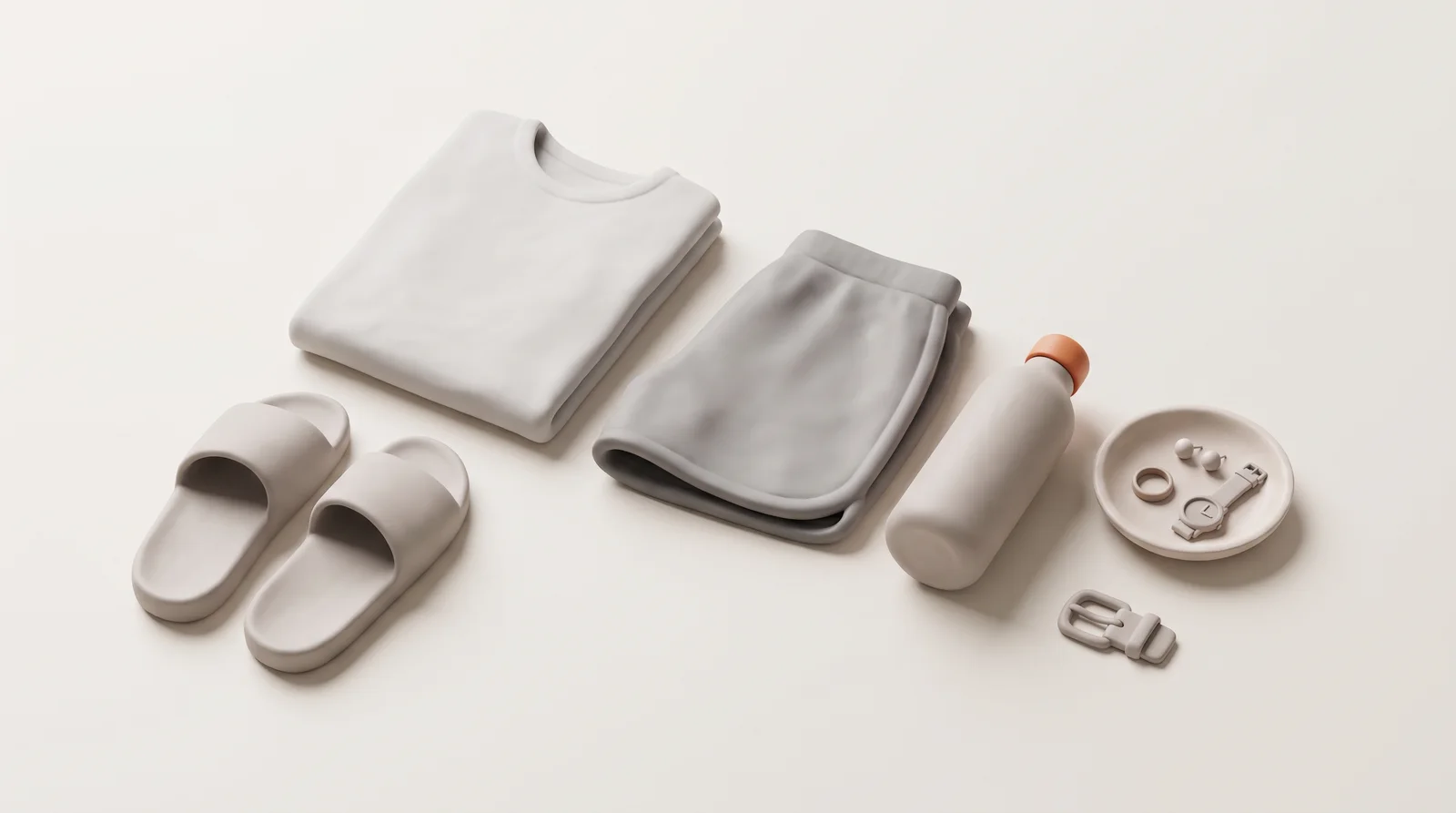
- Book the same time of day as your previous scan, ideally early morning.
- Fast overnight and arrive without a big drink in you; keep caffeine the same as last time.
- Skip training that morning, and keep the day before light and similar each time.
- Keep the days before consistent: no carb-load, unusually salty meal or alcohol-heavy night that you didn't have last time. If you take creatine, keep taking it the same way.
- Use the bathroom right before the scan.
- Wear metal-free clothes (no zippers, underwire or buttons) and remove jewelry, watches and belts.
- Mention recent contrast or barium studies and any chance of pregnancy; contrast can affect results for days to weeks.
- Ask which machine and software they use, and write it down with your results.
Researchers who study athletes recommend a similar protocol: rested, overnight-fasted, in minimal clothing and positioned the same way on the table every time (Nana et al., 2015).
How to make repeat DEXA scans comparable
Comparing two scans is where DEXA earns its price, and where most people misread it.
- Use the same scanner and software. A different machine, even at the same clinic, can shift percent fat by more than a few months of honest progress. If you move, treat the new scan as a fresh baseline.
- Repeat the same prep and time of day. Same fasting, same training pattern, same creatine habit, same morning slot.
- Ask for the same positioning. Many clinics use foam blocks and straps to put your hands, feet and head in the same place. Ask them to match your last scan.
- Space scans out. Leave enough time for the change you expect to be bigger than the noise: usually a couple of months or more.
- Compare kilograms, not just percentages. Look at fat mass and lean mass separately, then the percentage.
Every measurement has a least significant change: the smallest difference between two scans that you can be 95% confident is real. In college athletes scanned twice on the same day, it was about 0.3–0.5 kg for total fat mass and 0.4–0.6 kg for lean mass (Buehring et al., 2013). Scans on different days add normal day-to-day variation: in resistance-trained athletes, the error was almost twice as large for fat mass and more than three times as large for lean mass (Zemski et al., 2019). Try your own numbers:
Is my DEXA change real? Compare the change in fat mass and lean mass between two scans with a typical noise band. Two scans on the same day: changes smaller than about 0.5 kg (1.1 lb) of fat or 0.6 kg (1.3 lb) of lean mass may be measurement error. Scans weeks apart on the same machine with the same preparation: about 1 kg (2.2 lb) of fat and 2 kg (4.4 lb) of lean mass. Scans on different machines or with different preparation aren't directly comparable.
A 0.6 kg "gain in muscle" between two scans, then, could easily be a full glycogen tank. A 1.2 kg drop in fat mass over three months on the same machine, with the same prep, is much more likely to be real.
How much does a DEXA scan cost, and where can you get one?
Body composition DEXA is offered by dedicated body-scan clinics (some franchised), sports medicine and performance centers, some gyms, university exercise-science labs, and hospital imaging departments that run bone density scans. Prices vary widely by city and provider, and many clinics sell multi-scan packages. Body composition scans done for fitness are usually self-pay; a bone density scan your doctor orders for medical reasons is a different test with different coverage rules. Call ahead and ask what's included (regional results, visceral fat, a copy of the full report) and which machine they use.
Fill the gaps between scans with photos and a tape
Even a perfect scan is a snapshot every few months. In between, you need something cheap and frequent that shows direction:
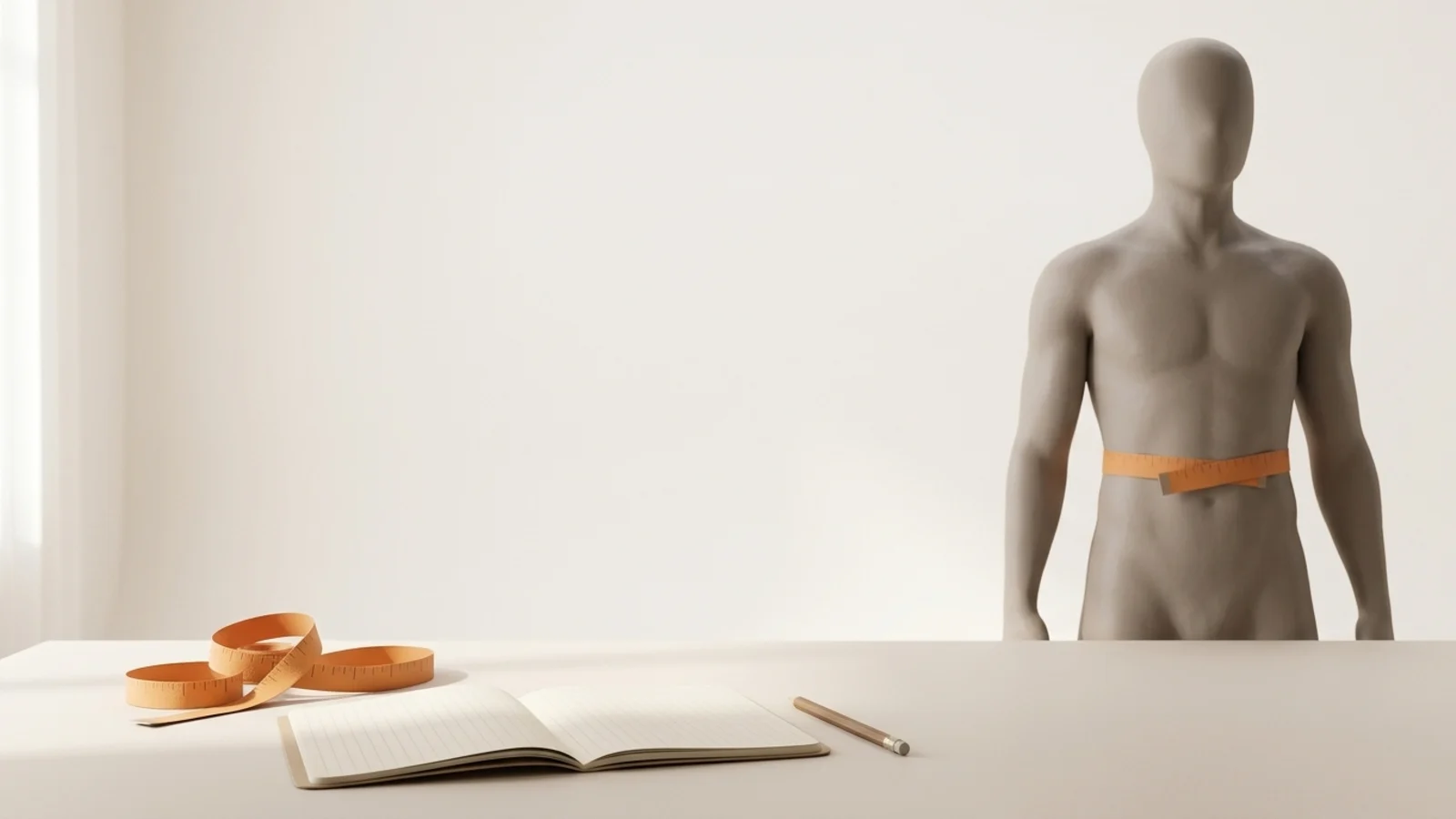
- Weekly waist measurement at the same spot, same time, same tape tension.
- A morning weight trend, read as a weekly average rather than day by day.
- Consistent progress photos, which show where change is happening (waist, back, arms) in a way no number does.
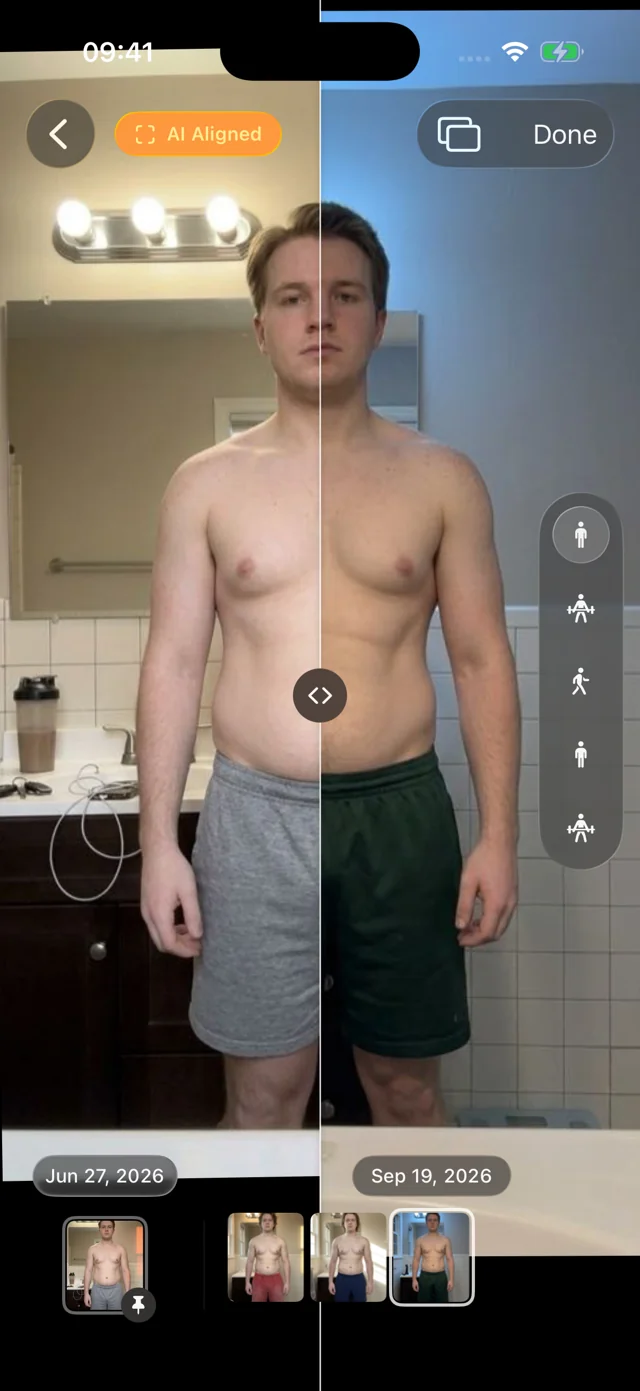
Photos are the piece most people get wrong: a slightly different distance, angle or light makes two dates impossible to compare. Keep the same spot, light, phone height and poses every time. Our guide to taking progress photos that actually show change has the full setup, and progress photo poses covers the standard set. Drag through sixteen weeks of photos taken the same way:
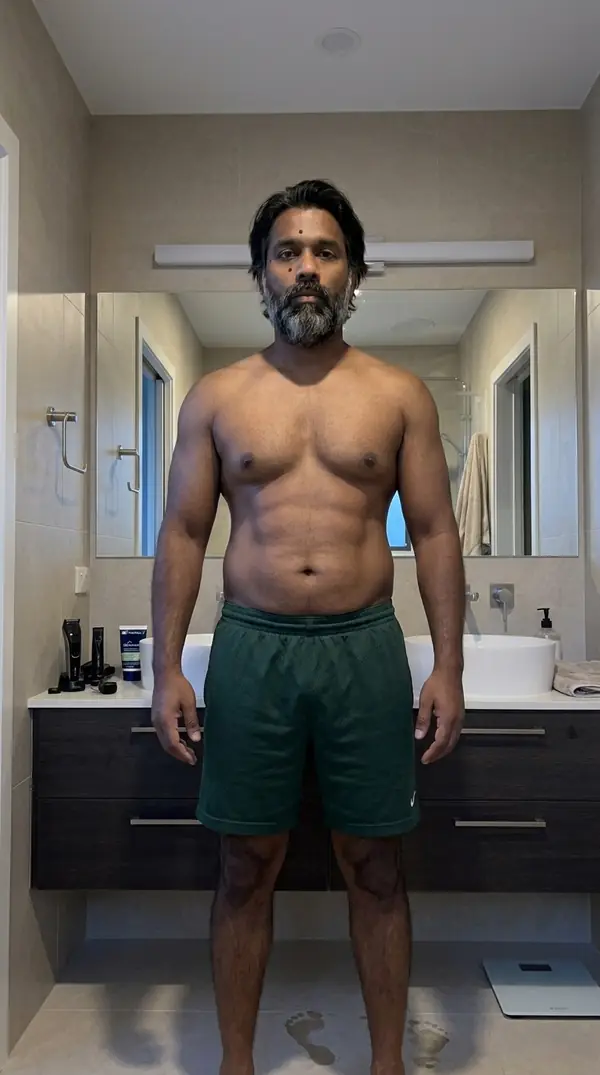
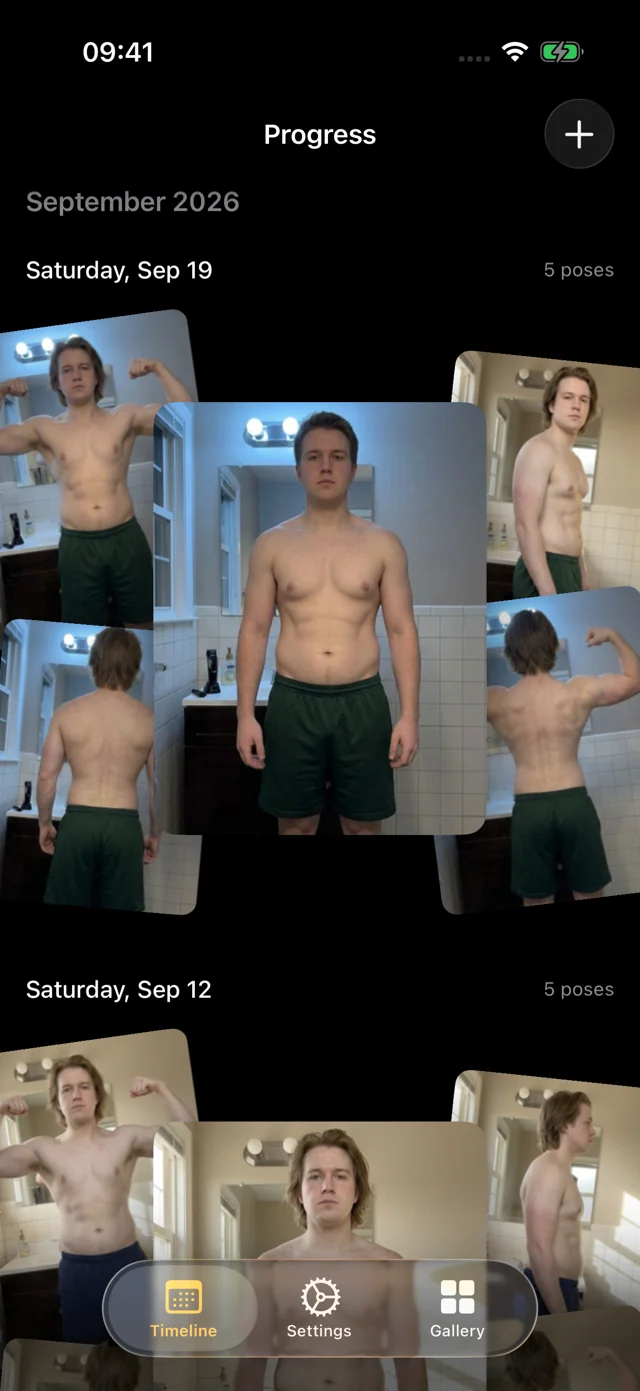
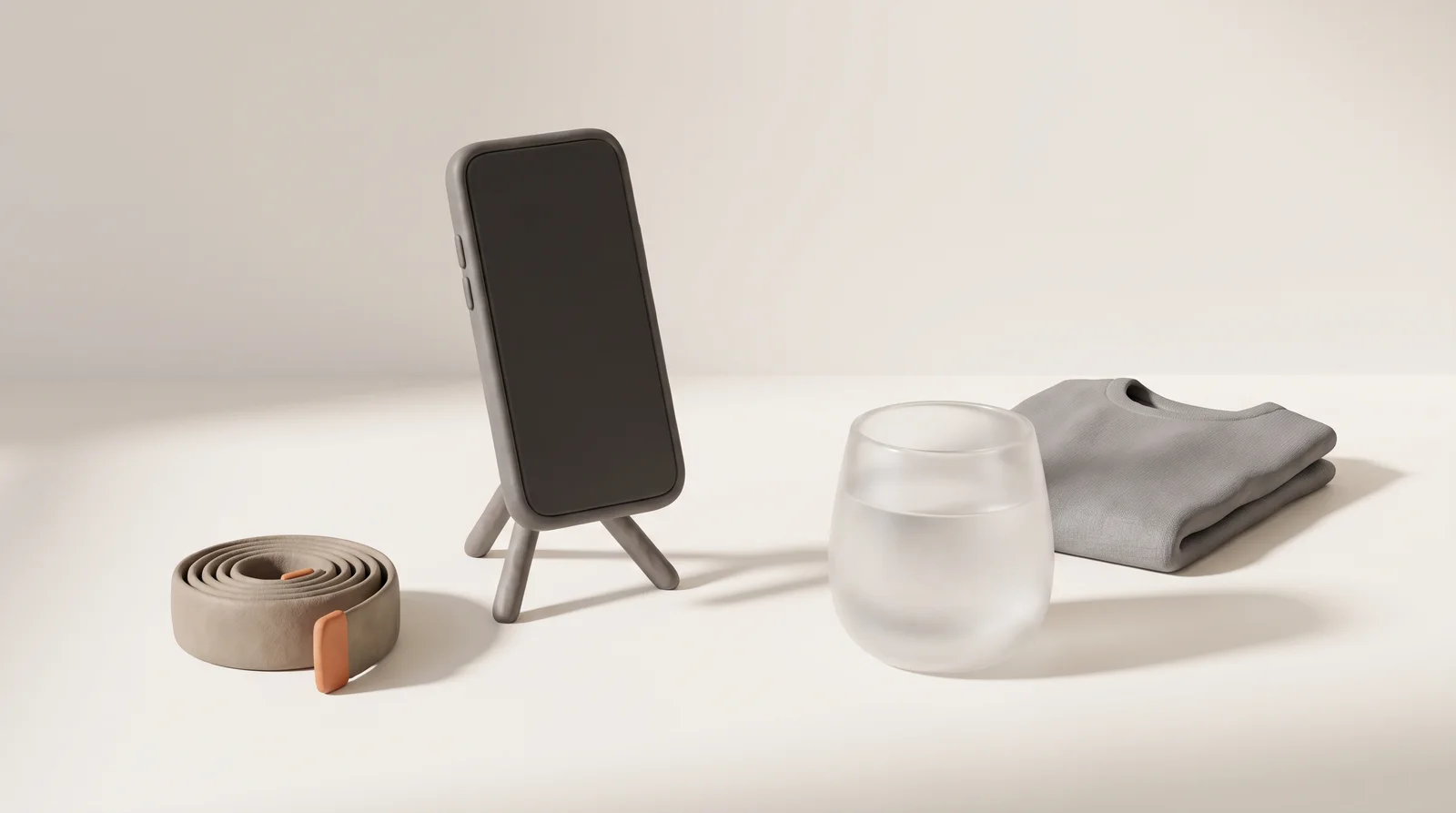
Progress handles the photo part. Hands-free capture walks you through five poses while your phone sits on a shelf, and every photo is AI aligned so you can slide a divider between any two dates. You can also log your weight and your DEXA body fat percentage with each session, so the scan numbers sit next to the photos taken the same week. Progress doesn't estimate body fat itself; it shows you the change. Your personal data never leaves your iPhone; we only collect basic usage data to improve the app, and you can turn it off.
If your scale has stalled while your waist and photos keep changing, read what body recomposition looks like in before and after photos. DEXA is often where people first see that they've lost fat while gaining lean mass.
FAQ
What is a good DEXA scan body fat percentage?
By ACE's widely cited categories, 14–17% is "fitness" for men and 21–24% for women; 18–24% and 25–31% are average. DEXA has no separate standard, so compare each scan with your own previous scans first and with population ranges second.
How accurate is DEXA for body fat percentage?
Very repeatable on the same machine under the same conditions, which makes it excellent for tracking change. A single reading can be a few percentage points off laboratory reference models, and scanner brands differ by over a point on average.
How often should you get a DEXA scan?
Often enough to answer your question, and far enough apart that the expected change is bigger than the noise. For most people tracking fat loss or muscle gain, that means every two to six months, with photos, waist measurements and a weight trend filling the gaps.
Is a DEXA scan safe?
The dose is very low, about 4–5 microsieverts on current machines, less than a day of natural background radiation. It isn't done during pregnancy.
Why is my DEXA body fat different from my smart scale?
Smart scales estimate body fat from electrical resistance with equations sensitive to hydration, meals and time of day; DEXA measures X-ray absorption. Neither is "the real one". Use one method consistently and watch its trend.